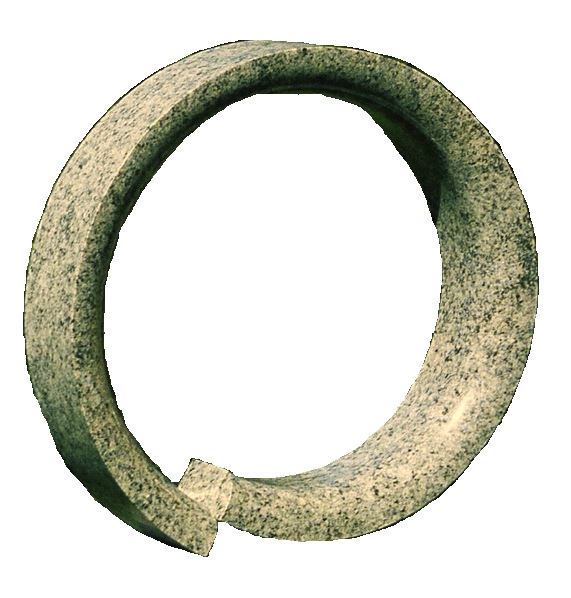
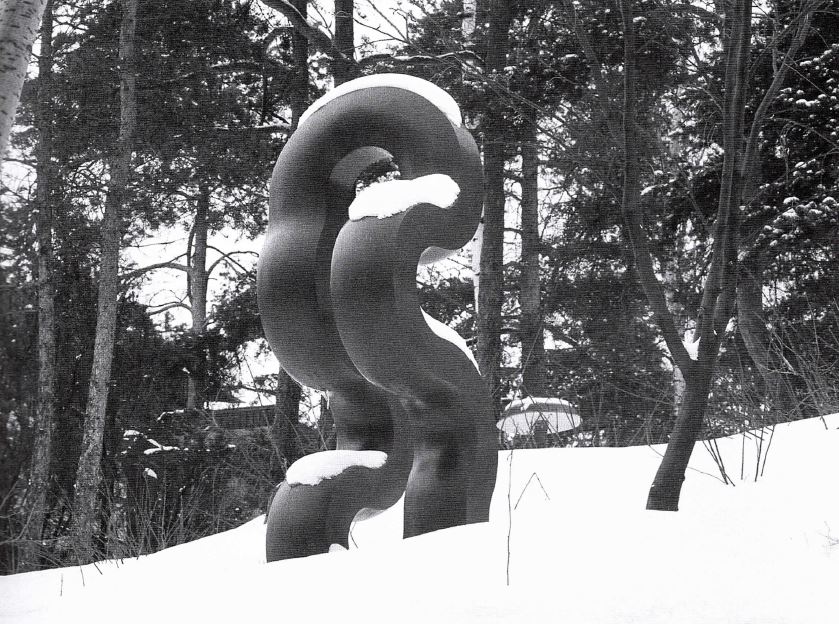
Scale: When one regards a monumental sculpture the first reaction is to its scale, the relationship between the human module, the site and the sculpture. This factor is as fundamental for sculptors as picture plane and edges are for painters.
Image: Each artist develops a style and imagery suited to his own goals. And in each case there are size limits within which the particular imagery can function consistently. If the work is too large or too small the identity of the image changes, usually into self-parody. So we find here a kind of inner scale, imposed by the image upon itself.
Environment: There are obviously important differences of environment between public and private sculpture. These differences do much to determine the nature and function of the work. An artwork in your home, an environment made for and focused entirely on you, becomes part of your life in a distinctly personal way. The sculpture/viewer dialogue is one to one. But a monumental sculpture in a public site addresses the group – the public. And your dialogue with it is shaped by your position as one of the group’s parts (physically at the very least). The places where you normally encounter monumental sculpture – city squares, parks, universities, etc. – are designed for and defined by the group and its activities there
So while one can contemplate an artwork quietly and alone in one’s home this is not the case with public sculpture
The human presence at the site and around the sculpture affects the sculpture in several interesting ways. To start with, it illuminates and emphasizes the strength or weakness of the artist’s use of scale. Our sense of our own size and presence is at the heart of the scale mechanism, so the presence of others near the sculpture clarifies our perception of our own relationship with the sculpture and site.
The movement of the individual or group around the sculpture also affects it. Whether it’s the solitary stroller in the park or rush hour traffic in a public square, the sculpture becomes part of the movement.
More leisurely changes, such as day into night, summer into winter, also play a part in the sculpture/viewer relation. One’s feelings towards the sculpture covered with snow are colored by memories of the same work surrounded by green grass and trees, or wet with rain. And one’s perception of it at night is affected by having seen it at rush hour in the afternoon.
In short, with monumental sculpture one trades the possibility of isolating the artwork, and concentrating on it absolutely, for the possibility of introducing the artwork as performer on the stage of the outside world.
One also trades the exploration of the individual self for the reassurance of the group self.
William Crovello for Danish Art Journal CRAS 1979
 WILLIAM CROVELLO (1929-2021)
Leave a comment