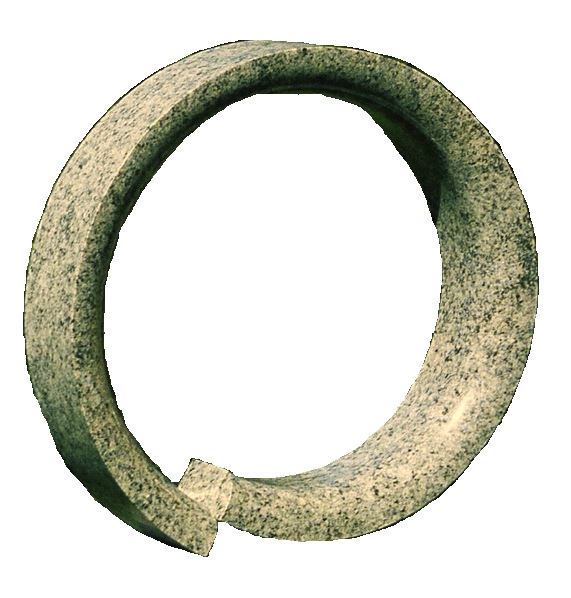
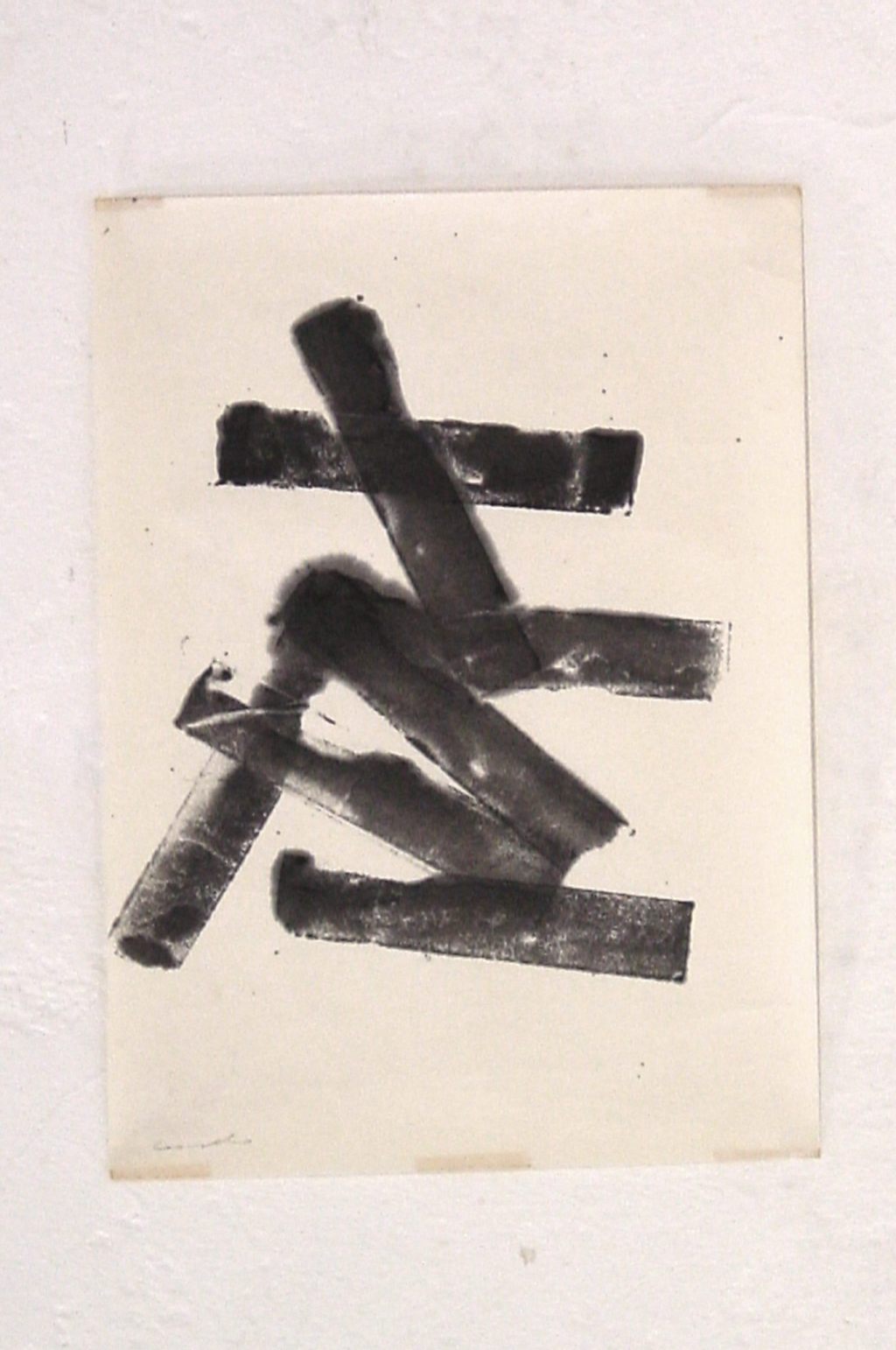
William Crovello (1929-2021) was an American sculptor whose work uniquely bridged Eastern and Western artistic traditions, blending the fluid elegance of Japanese calligraphy with the enduring strength of monumental sculpture. Born in New York City, Crovello’s artistic journey took him across continents, resulting in a body of work that captivated viewers and transformed public spaces around the world.
Crovello’s artistic foundations were laid at the Rhode Island School of Design, where he studied painting and graphics. His time in the U.S. Air Force allowed him to visit Korea, Japan, Taiwan, the Philippines, Thailand, and Vietnam arousing his interest in Eastern culture and aesthetics, especially that of Japan. Upon leaving the military he studied Japanese and started to shape his artistic vision. Particularly influential was his four-year stay in Tokyo, where he immersed himself in the study of Japanese calligraphy under master Taiun Yanagida.
This deep engagement with calligraphy became the cornerstone of Crovello’s sculptural practice. As he explained, calligraphy allowed him to work in a “world of pure form,” creating shapes whose beauty was intrinsic rather than representational. This philosophy is evident in his sculptures, which often appear as three-dimensional manifestations of calligraphic strokes, preserving the dynamism and elegance of brush work in materials like granite, marble, and steel.
Crovello’s work is characterized by its polished surfaces, smooth designs, and geometric abstraction. His sculptures, whether monumental public installations or more intimate gallery pieces, invite viewers to contemplate the interplay of line, form, and space. Works like “Katana” (Clark Institute, Williamstown MA), carved from red granite, exemplify his ability to imbue hard stone with a sense of balance and flexibility reminiscent of calligraphic strokes.
Throughout his career, Crovello received numerous public commissions and exhibited widely. His sculptures can be found in prominent locations such the PepsiCo Sculpture Park in Purchase, NY and until recently New York City’s Rockefeller Center. International recognition came through exhibitions at prestigious venues like the Palazzo dei Diamanti in Ferrara, Italy, the Hermitage Museum in St. Petersburg, Russia and the Palazzo Vecchio in Florence, Italy.
Crovello’s approach to public art was thoughtful and site-specific. He believed that monumental sculpture should consider scale, image, and environment, creating a dialogue between the artwork, its surroundings, and the viewing public. This philosophy resulted in sculptures that not only enhance their locations but also invite interaction and contemplation.
The fusion of Eastern calligraphy and Western sculptural traditions in Crovello’s work represents a significant contribution to 20th and 21st-century art. His sculptures serve as cultural bridges, embodying the potential for artistic cross-pollination in an increasingly globalized world. By translating the ephemeral gestures of calligraphy into enduring three-dimensional forms, Crovello created a unique visual language that continues to resonate with viewers.
William Crovello’s legacy extends beyond his physical sculptures. He paved the way for artists to explore the intersection of different art forms and cultures, demonstrating the transformative potential of cultural exchange in art. As we continue to appreciate his work, we are reminded of art’s power to transcend boundaries and connect diverse traditions, creating beauty that speaks to our shared human experience.
 WILLIAM CROVELLO (1929-2021)
Leave a comment